
Having access to your case data and having control over it are not the same thing.
Your firm may own its data. But if a technology vendor decides how you can access it, connect it, report on it or move it, how much control do you actually have?
That question was at the center of our recent “Your Data. Your Rules: Who Really Controls Your Firm’s Case Data?” webinar with Crystal Hamilton, Litigation Technology Manager at Central States Fund, Jon Groth, Owner and Attorney at Groth Law Firm, and Matt Lautz, CEO of Neostella.
The conversation surfaced three questions every legal team should be asking about its technology.
1. can you access your data, or can you actually use it?
There is a difference.
Crystal Hamilton described the distinction between knowing where your data lives and having the ability to actually do something with it.
That matters when firms need to connect systems, build reports, control permissions or introduce new technology into their operations. Access alone doesn’t give a firm that freedom.
The better question is: What can we do with our data without asking our vendor for permission?
2. what happens when basic access becomes difficult?
For Jon Groth, the issue isn’t theoretical.
His firm has experienced support tickets remaining open for years, including challenges around something as fundamental as accessing, using and reading medical records and other documents.
That is where a technology limitation becomes an operational problem.
Your team shouldn’t have to build workarounds just to use information the firm already owns.
3. ask the hard questions before you sign.
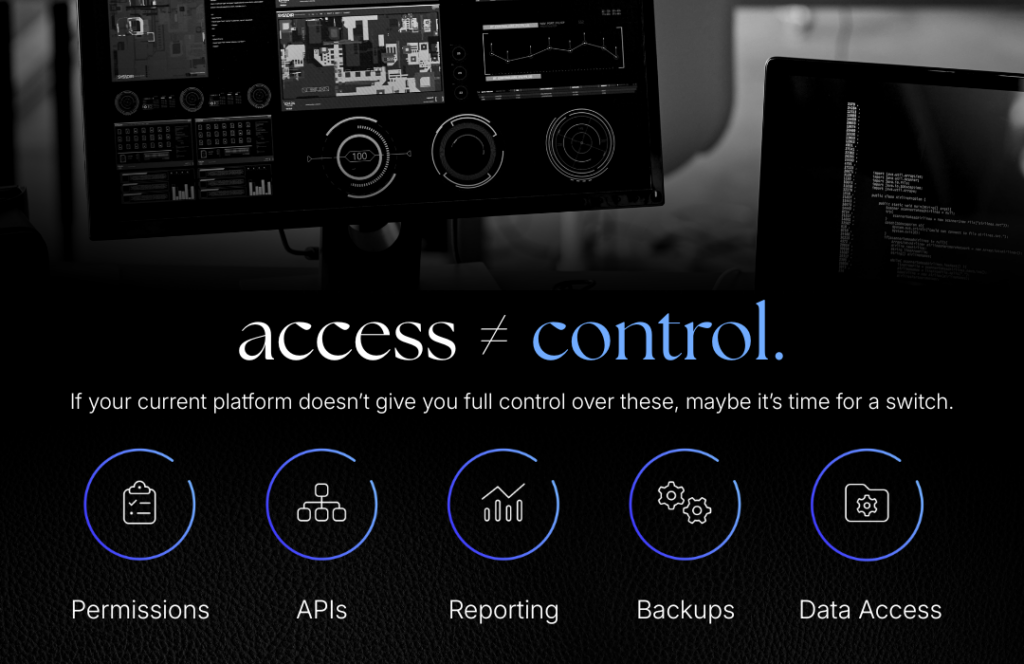
Data ownership shouldn’t become important only when you need to migrate, integrate another system or retrieve information your team can’t easily access.
Before committing to a platform, ask:
Permissions: Can we control access down to specific data and documents?
APIs: Can our data connect with the technology we choose?
Reporting: Can our team build and customize the reports we need without relying on the vendor?
Backups: How is our data backed up, and can we retrieve those backups ourselves?
Portability: Can we export our data in a usable format at any time without unnecessary fees or restrictions?
And don’t stop at the answer.
Ask to see it work.
ownership isn’t the finish line. control is.
Owning your data means very little if someone else determines what you’re allowed to do with it.
Your firm should be able to access its data, understand it, connect it, report on it and move it without unnecessary barriers.
Because the most important question isn’t simply: Who owns your firm’s data?
It’s: Who controls what you can do with it?