When cloud technology first started changing the way businesses operated, I spent a lot of time in customer conversations talking about trust.
Is it secure? What happens to my data? How much control am I giving up? Those were legitimate questions. Moving critical business systems away from infrastructure you could physically see required a different way of thinking about technology.
Today, cloud barely requires that introduction.
The ABA’s 2024 Legal Technology Survey found that roughly 75% of attorneys now use cloud computing for work, compared with 60% just three years earlier. I’ve been thinking about that shift a lot lately because we’re standing at another one.
This time, it’s AI, but I think there’s an important lesson from the cloud era that buyers should carry into this one: Don’t make a long-term technology decision based only on what a platform can do today. Pay attention to what it will allow you to choose tomorrow.
the question has changed.
A few years ago, firms were asking whether they should use AI at all. That’s changing quickly. ABA research found that AI use among attorneys jumped from roughly 11% in 2023 to 30.2% in 2024. Now every software company has an AI story. That makes the buying decision harder, not easier.
A feature may look differentiated today and become table stakes six months from now and a tool that does not exist today may become essential to your firm two years from now; nobody can tell you exactly which AI technologies your firm will need next.
And that’s precisely the point. Your technology strategy shouldn’t depend on someone predicting the future correctly. It should give you room to respond when the future arrives.
customer choice is a technology strategy.
I spend my career talking with customers about what they need from technology. One thing has become increasingly clear: choice isn’t a nice feature to have. Choice is strategic.
If your core platform controls which applications you can use, how you can access your data, which partners you can work with or how easily you can bring new technology into the business, those aren’t just technical limitations.
They’re business limitations. This is why open architecture matters.
An open API may sound like a technical feature. From the customer’s seat, it means something much simpler: You retain options.
You can connect the technology that makes sense for your firm, experiment as new capabilities emerge, work with the partners that bring the right expertise, and evolve without having to replace the foundation every time the market changes.
That becomes even more important in an AI market moving this quickly.
don’t buy the roadmap. buy the ability to change.
I’ve seen buyers fall into a familiar trap: trying to find the platform that has every answer. Unfortunately, this type of platform doesn’t exist, and won’t exist. No technology company can build every capability every customer will ever need, and no vendor can predict which tools, AI models or applications will define the next five years.
This is why your question needs to change from “does this platform have everything we want today?” to “what happens when we want something different tomorrow?”
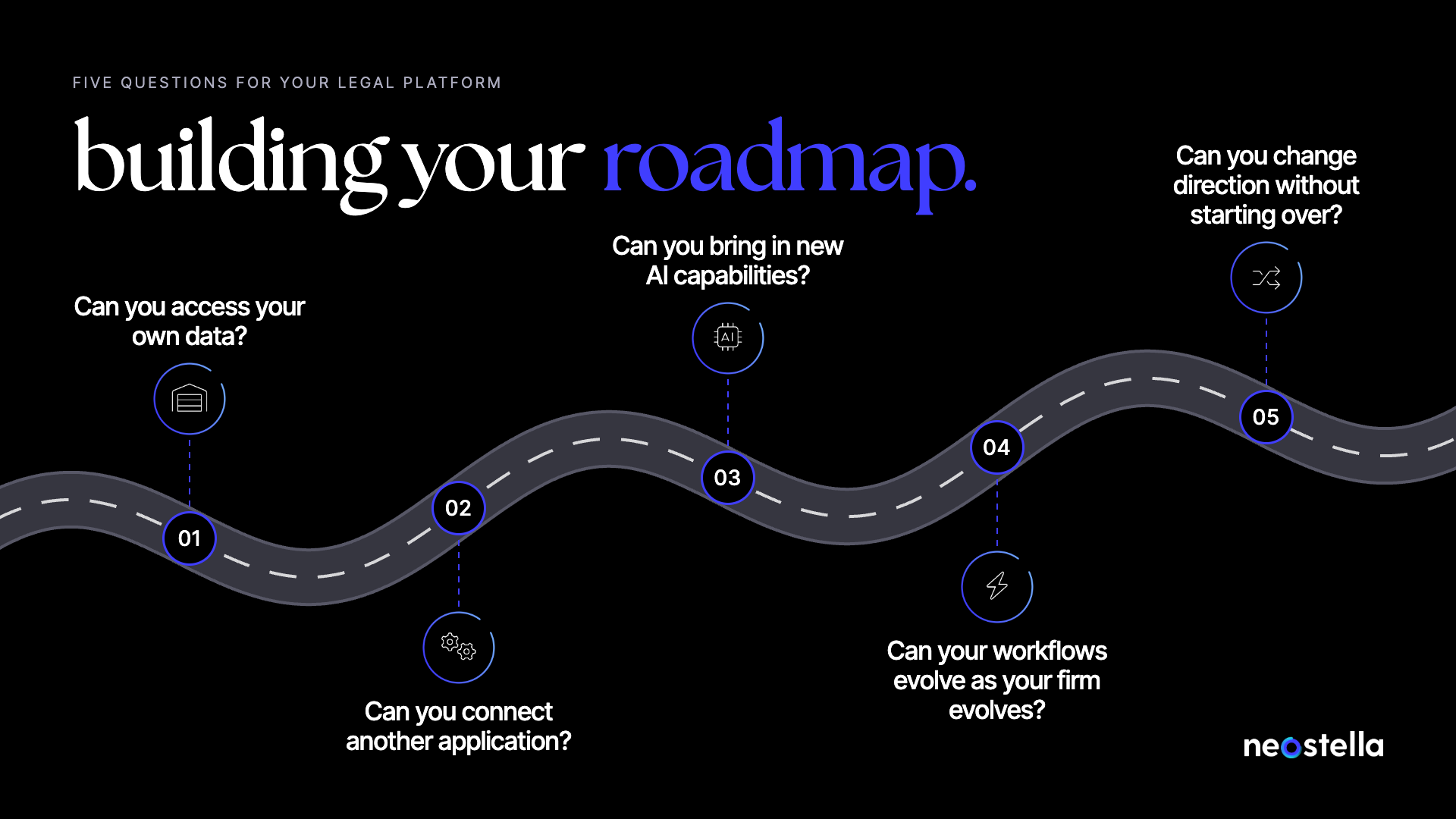
Those questions tell you far more about the longevity of a technology decision than a feature checklist ever will.
we’ve been here before.
The cloud transition taught customers to think differently about where technology lived. AI, in a similar fashion, should make us think differently about how quickly technology can change.
There is a similar lesson that has come out from both experiences. The companies that make the strongest technology decisions aren’t the ones that perfectly predict what’s next. They’re the ones that don’t box themselves in before it arrives.
The best technology doesn’t make every decision for you. It gives you the freedom to keep making them.