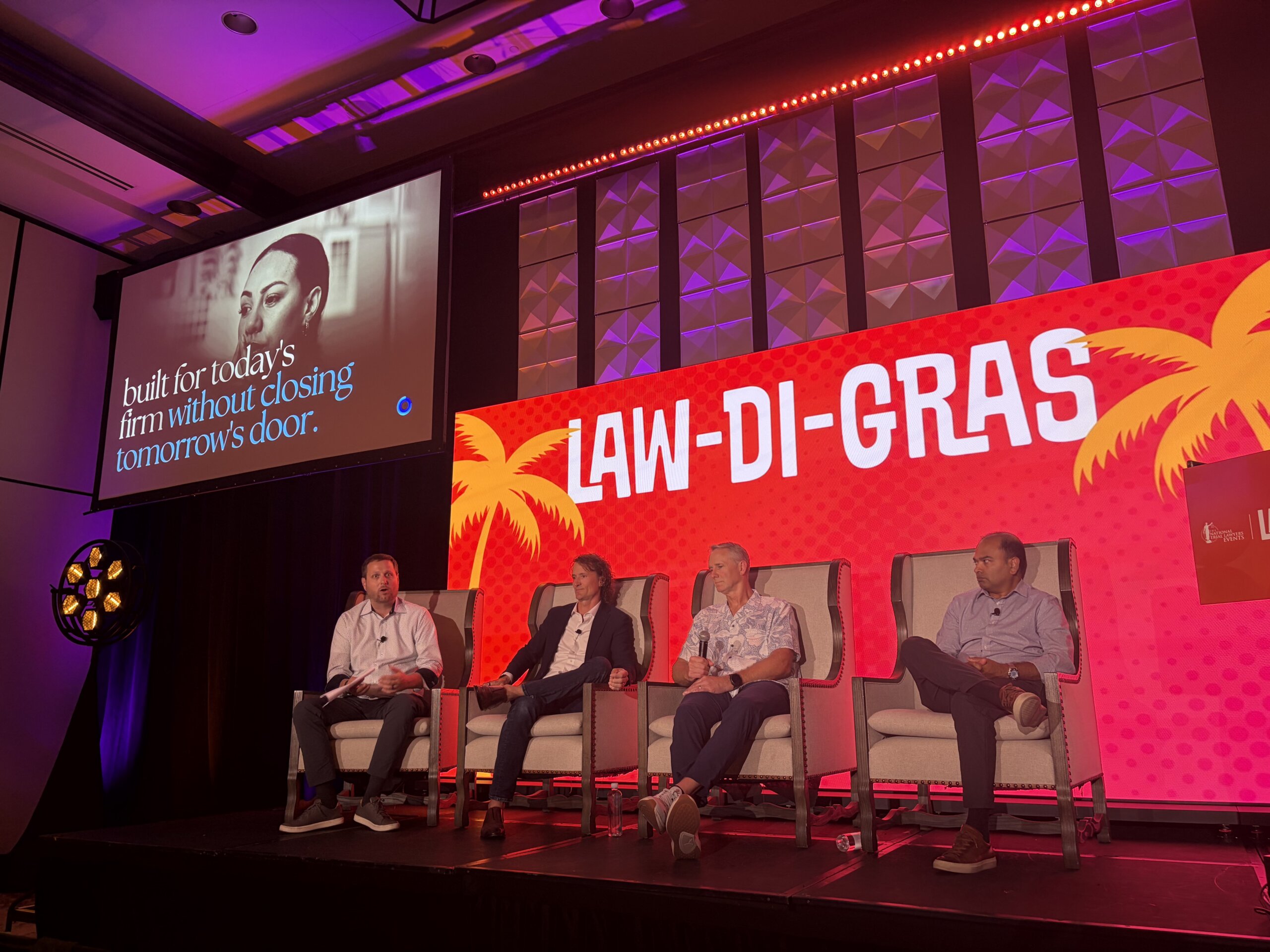
There are conferences where you spend three days under fluorescent lights, bounce from booth to booth, sit through panels, collect a tote bag, and go home. Law Di Gras is not that.
In San Diego, conversations about AI, data ownership, and firm technology strategy spilled out of the panels and into the rest of the week. We caught up with partners on the show floor, heard the story behind the Weston Wayne’s Warriors Golf Tournament, saw booths get genuinely creative, and kept more than a few conversations going later at Law Di Jam.
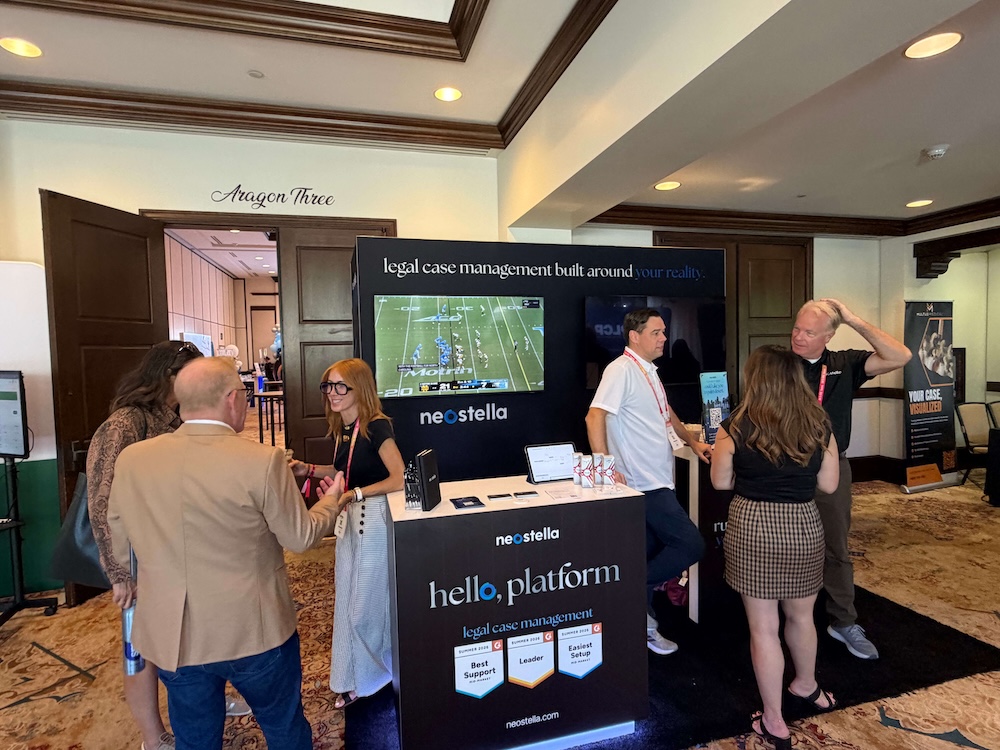
That mix is intentional. Law Di Gras was created by Robert Simon, co-founder of Simon Law Group and Justice HQ, and the event makes room for the serious side of the legal industry without stripping away everything else that makes people want to be there: music, wellness, community, competition, and a real focus on justice.
For us, one question kept surfacing in different ways: How should firms make technology decisions when the technology itself keeps changing?
That question was at the center of two sessions featuring Neostella CEO Matt Lautz.
start with the problem, not the shiny thing.
Matt’s joined Rory Pendergast, Managing Attorney at Rory Law, Breven Parsons, COO at Singleton Scrieber, and Kaushik Chakraborti, Chief AI Officer at Morgan and Morgan on the mainstage for “Who Controls Your Firm?”, a conversation that moved between data ownership, flexibility, simplicity, specialization, and the increasingly complicated technology choices firms are making.
Matt started with something simple:
“Start with the problem, not a solution.”
It was a useful thing to hear at a conference surrounded by very good technology. New products are not the problem. The harder part is knowing when your firm actually needs one.
Matt put a sharper point on it:
“If you can’t clearly articulate the 30-second version of exactly what problem…the solution solves, then you’re probably shopping for something that you don’t need.”
Breven came at the same issue from the operations side: spend more time defining the problem, involve the people who actually understand it, and make sure the technology is enabling the firm’s process rather than dictating it.
There was no shortage of great companies there. We spent time with Neostella partners including Supio, Lexamica, Eve, Foundation AI, MoveDocs/Oasis Financial, Hona, Coastal Research, and USClaims, all solving very different problems across the personal injury law ecosystem.
the best tech stack may not be the smallest one.
When the panel turned to whether firms will use more or fewer technology vendors in the future, Kaushik pushed back on the idea that consolidation is always the answer:
“It’s not about fewer vendors or more consolidation in the vendor landscape. It’s more about being able to pick and choose the right tool for the right job.”
That felt like one of the most useful takeaways of the entire week.
There’s an understandable appeal to fewer systems, fewer contracts, and fewer places for teams to work. But reducing vendor count and improving the way a firm operates are not necessarily the same thing.
A firm may be better served by several highly capable tools than by one system that performs every function at 60%.
Sometimes the right answer is a specialized tool. Sometimes it’s consolidation. The important part is having enough flexibility to make that choice without creating a mess around it.
Rory called flexibility the most important factor for him. Breven cautioned against changing the way a firm delivers legal services simply to accommodate a system it purchased. Kaushik talked about choosing tools based on where they are strongest.
some decisions are glass balls. others are rubber balls.
Another useful framework from the panel was the distinction between decisions that are easy to reverse and decisions that are not.
Breven described this as an analogy of glass balls and rubber balls.
Some technology experiments can bounce. Others can break something much harder to repair. That distinction matters because firms are being asked to move faster without becoming careless.
Not every AI tool requires a six-month evaluation. Not every enterprise technology decision should be made in a week. Knowing which is which may be one of the most important technology skills a firm can develop.
so, who really controls your firm?
The title of the panel sounded provocative, but the conversation made the question surprisingly practical.
- If your firm owns its data, can you actually get to it?
- Can you move it?
- Can another system use it?
- Do you know where it goes when you connect a new tool?
- And if a better option comes along two years from now, how hard will it be to change?
Those questions are where “data ownership” becomes something more tangible.
Rory described inaccessible data as “false control.” Kaushik talked about the risk of firms not having visibility into what happens to their information. Matt’s panel with MoveDocs expanded that into the broader architecture question: how do you build a foundation that lets the firm keep choosing the best tool for a particular use case?
That doesn’t mean every firm needs to build its own technology ecosystem from scratch. It does mean someone needs to understand how the pieces fit together.
the conversations weren’t limited to the stage.
For all the notes we took during Matt’s sessions, some of our favorite parts of Law Di Gras happened elsewhere.
The Weston Wayne’s Warriors Golf Tournament gave us a chance to hear the story behind the foundation and the families it supports. Proceeds from the tournament support families fighting childhood cancer, which gave the week a different kind of perspective before the conference even got fully underway.
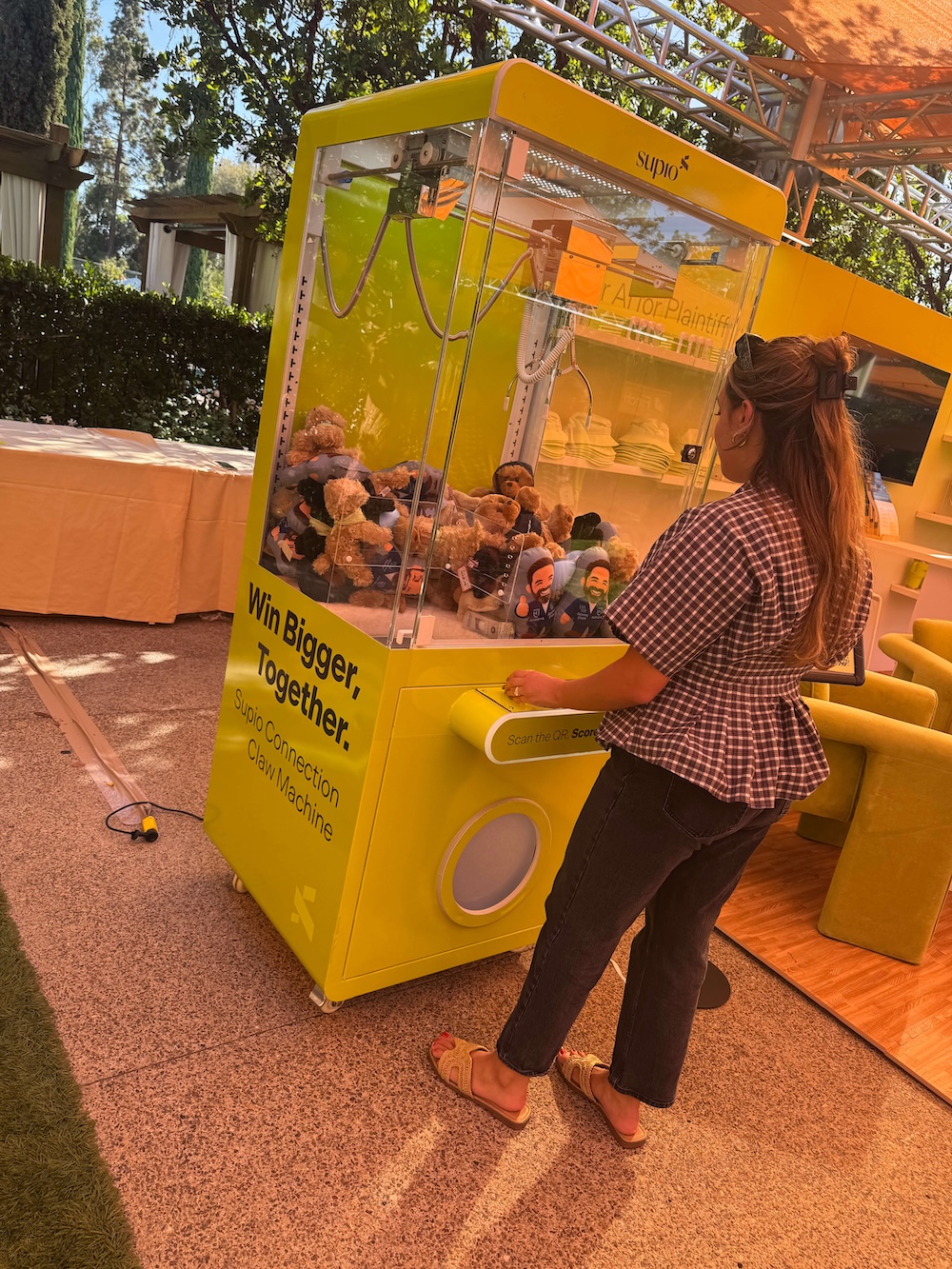
The show floor had plenty of personality too. Supio brought a claw machine. 8am handed out Magic 8 Balls. Women’s Wellness Day carved out space for something completely different from the usual conference schedule.
And then there was Law Di Jam. After days of booths, meetings, and sessions, getting to see people outside of the usual conference setup was one of the best parts of the week. Conversations got more casual. People stayed longer. The lines between customer, partner, vendor, speaker, and friend got a little less important.
It takes the issues facing the legal industry seriously without requiring everyone to be serious the entire time.
takeaways from san diego.
Law Di Gras managed to hold two things at once.
It created room for big conversations about where the legal industry is going, while also making space for the relationships, causes, creativity, and culture that make those conversations worth having in the first place.
And the clearest technology takeaway was not “buy more AI,” “use fewer vendors,” or “consolidate everything.”
It was something more durable:
Know the problem you are solving. Protect your ability to choose. Keep control of your data. And build a technology foundation flexible enough to change when the right answer changes. Because it will.
If your firm is asking the same questions about control, flexibility, or what comes next, let’s keep the conversation going.